
Today’s customers expect immediate and clear communication at every stage of their interaction with a business. From the moment they place an order to the completion of a service, they want to know exactly what is happening without having to search for information themselves.
In this environment, customer notifications are no longer just an additional communication feature. They are a core part of the overall customer experience.
A well-designed notification strategy can improve trust, reduce support workload, and significantly increase customer satisfaction.
What Are Customer Notifications?
Customer notifications are automated or real-time messages that inform customers about an action, update, or important event.
They are commonly delivered through:
- SMS
- Viber and other messaging apps
Unlike promotional messages, notifications are primarily informational and operational in nature.
Their goal is to provide useful and timely information at the right moment.
Why Customer Notifications Matter
Proper communication directly affects how customers perceive your business.
When customers know exactly what is happening:
- they feel more secure
- uncertainty is reduced
- trust in your brand increases
At the same time, notifications significantly reduce incoming support requests, since customers are proactively informed.
For example, a shipping update or an appointment reminder can prevent dozens of phone calls or emails.
Examples of Customer Notifications
Notifications can be used across many different scenarios depending on your business type.
Some of the most common examples include:
| Category | Examples |
|---|---|
| 📦 Order & Shipping Updates |
|
| 📅 Appointment Reminders |
|
| 💳 Payment Notifications |
|
| 🔐 Security Notifications |
|
| 🚨 Critical Alerts |
|
In all these cases, the goal remains the same: timely and reliable communication.
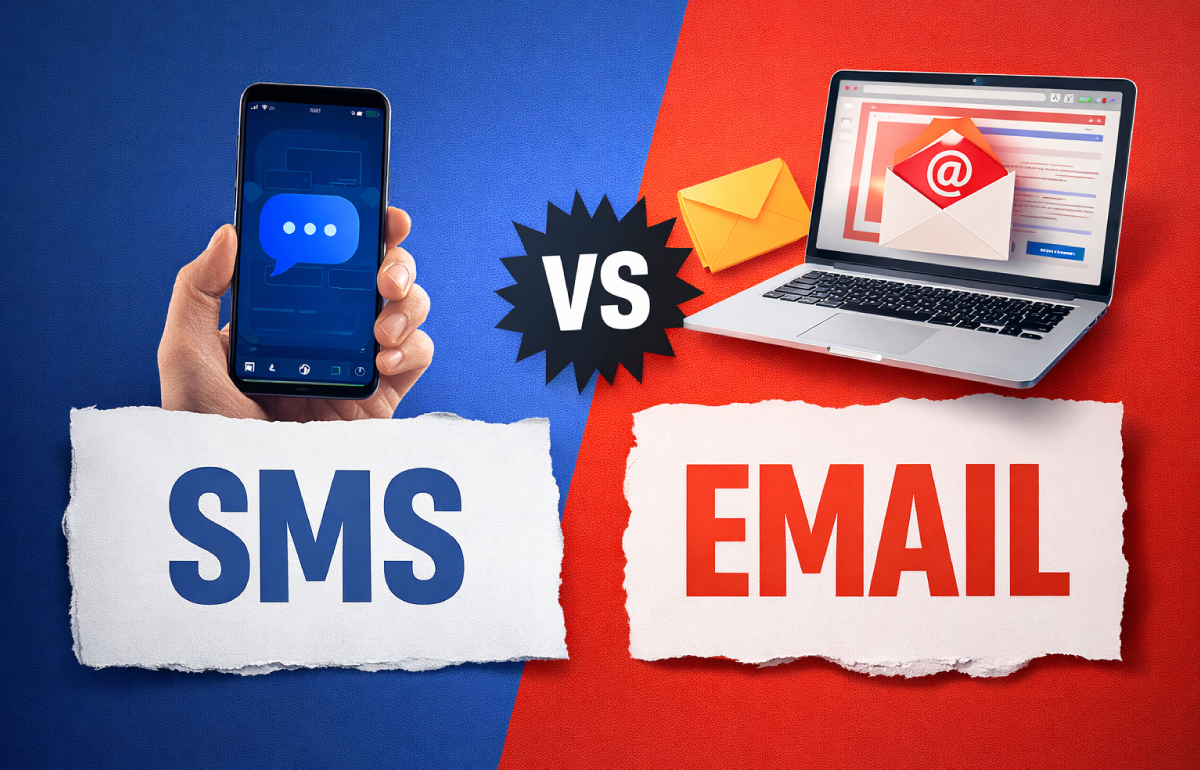
Which Channel Should You Use?
Choosing the right communication channel plays a major role in the effectiveness of your notifications.
SMS
SMS remains ideal for:
- urgent updates
- OTPs
- high-priority reminders
Thanks to its high open rates, it is considered one of the most reliable communication channels.
Viber & Messaging Apps
Messaging apps are ideal for:
- richer communication
- branded experiences
- interactive notifications
Email works best when:
- more detailed information is required
- attachments or additional data are needed
The right channel depends on:
- the importance of the message
- urgency
- the stage of the customer journey
Common Mistakes Businesses Make
Although notifications are extremely useful, many businesses use them incorrectly.
Some of the most common mistakes include:
- sending too many notifications
- using generic, non-personalized messages
- poor timing
- choosing the wrong communication channel
- lack of automation
- lack of segmentation
These issues can overwhelm customers and reduce communication effectiveness.
How to Build an Effective Notification Strategy
To make customer notifications truly effective, you need a strategic approach.
First, it is important to map the key touchpoints of the customer journey and identify what type of information customers actually need at each stage.
Then you can:
- define triggers for automated notifications
- choose the right communication channel for each case
- apply personalization
- measure notification performance
The right balance is essential. Customers do not want more messages — they want more useful messages.
Conclusion
Customer notifications have become a critical part of the customer experience.
Businesses that invest in timely and effective communication are able to:
- improve customer trust
- reduce support workload
- increase communication efficiency
In a world where speed and transparency matter more than ever, a strong notification strategy can become a significant competitive advantage.
Talk to an Expert