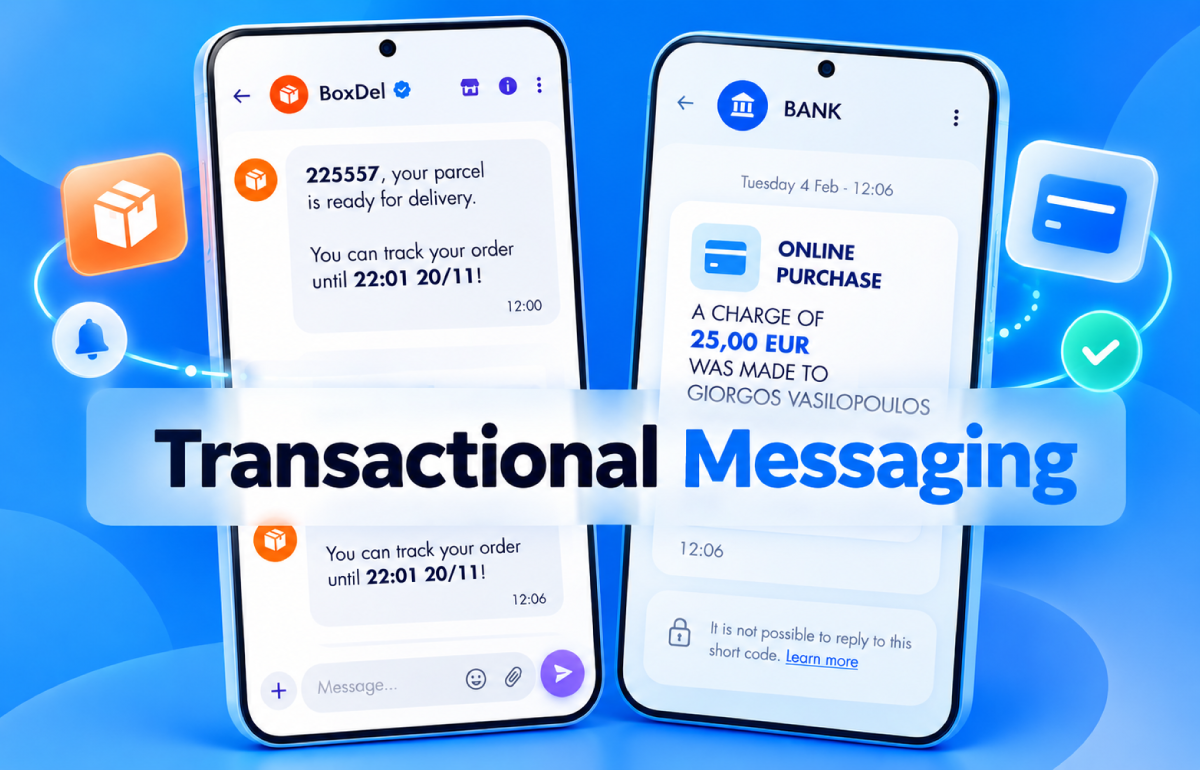

Most businesses assume that once an SMS or notification is sent, it will instantly reach its recipient.
In reality, however, the process is far more complex.
Behind every message lies an entire communication infrastructure that includes:
- mobile network operators
- SMS providers
- routing mechanisms
- security filters
- technical delivery systems
All of these factors influence SMS deliverability, the ability of a message to reach the intended recipient successfully and on time. For businesses, this is not simply a technical issue. It directly affects customer experience, operational efficiency, and the overall success of communication strategies.
What Is SMS Deliverability?
SMS deliverability refers to the ability of an SMS message to be successfully delivered to the recipient's mobile device within an acceptable timeframe.
It is about much more than simply sending a message. Good deliverability means that the message:
- is successfully delivered
- arrives with minimal delay
- is displayed correctly on the recipient's device
- is not blocked by filtering mechanisms or routing issues
A delayed or undelivered message can have serious consequences, particularly when communication is time-sensitive.
Why SMS Deliverability Matters
For many organizations, SMS has become a mission-critical communication channel.
It is commonly used for:
- One-Time Passwords (OTPs)
- payment confirmations
- appointment reminders
- delivery updates
- emergency notifications
- security alerts
When these messages fail to reach customers, the impact goes beyond communication.
- frustrated customers
- increased support requests
- abandoned transactions
- lost revenue
- reduced trust in your brand
For this reason, SMS deliverability should be viewed as a business KPI, not just a technical metric.
The Most Common Reasons SMS Messages Fail
Several factors can prevent an SMS from being successfully delivered.
| Reason | Description | How it affects delivery |
|---|---|---|
| 📵 Invalid or Inactive Phone Numbers | One of the most common causes of delivery failures is poor data quality. Invalid, inactive, or outdated phone numbers naturally reduce delivery rates and negatively impact campaign performance. | Maintaining an accurate contact database is one of the simplest ways to improve deliverability. |
| 🚫 Carrier Filtering | Mobile network operators use sophisticated filtering systems to protect users from spam, fraud, and malicious traffic. |
Messages may be blocked if they:
Following messaging best practices and working with reputable providers significantly reduces this risk. |
| 🌍 Routing Issues | Before reaching the recipient, every SMS travels through multiple networks. This process is known as message routing. |
Poor routing quality may result in:
A reliable SMS provider continuously optimizes routing to ensure maximum delivery performance. |
| 📶 Device or Network Availability |
Delivery may be delayed because:
|
Although these situations are outside your control, they are still part of the overall delivery process. |
How Deliverability Affects Customer Experience
Today's customers expect instant communication.
Whether they are waiting for an OTP, a payment confirmation, or a shipping notification, they expect information to arrive immediately.
When messages are delayed or never delivered:
- customer confidence decreases
- support inquiries increase
- transactions may be abandoned
- overall satisfaction declines
This is particularly important for industries such as:
- eCommerce
- banking and fintech
- logistics
- healthcare
- customer service
In these sectors, reliable communication is often essential to the customer journey.
How to Improve SMS Deliverability
Improving SMS deliverability requires both a solid technical infrastructure and good communication practices.
✔️ Maintain a Clean Contact Database
Regularly remove:
- inactive phone numbers
- invalid contacts
- duplicate records
- outdated customer information
A high-quality database contributes directly to higher delivery rates.
✔️ Choose a Reliable SMS Provider
Your provider plays a critical role in message delivery.
Look for a provider that offers:
- reliable routing
- direct carrier connections
- high availability
- real-time delivery reports
- continuous network monitoring
A strong infrastructure significantly improves delivery performance.
✔️ Avoid Spam-Like Content
Messages that resemble spam are more likely to be filtered.
Avoid:
- excessive links
- misleading wording
- unnecessary capitalization
- overly promotional language in transactional messages
Writing clear, relevant, and expected messages helps improve deliverability.
✔️ Monitor Delivery Reports
Tracking message performance allows you to identify problems before they affect customers.
Monitor key metrics such as:
- delivery rate
- failed deliveries
- delivery delays
- carrier response codes
These insights help optimize future campaigns and improve overall communication reliability.
SMS Deliverability and Business Messaging
In a modern business messaging strategy, message delivery is just as important as message content. Creating well-designed campaigns is not enough if your messages fail to reach customers.
Reliable deliverability is essential for:
- customer communication
- automated workflows
- transactional messaging
- critical business notifications
Successful communication depends on both strategy and infrastructure.
Conclusion
SMS deliverability is one of the most important and often overlooked elements of business communication.
A message that arrives late or fails to arrive at all can negatively affect:
- customer experience
- business operations
- sales performance
- brand reputation
Businesses that invest in reliable messaging infrastructure, trusted providers, and high-quality communication practices are better positioned to deliver fast, dependable, and effective customer communication.
Talk to an Expert