SMS Marketing remains an important direct communication channel for businesses looking to engage customers with special offers, new products, service updates, and personalized promotional campaigns.
However, the effectiveness of an SMS campaign depends on more than compelling content or the capabilities of your messaging platform. Equally important is how phone numbers are collected, what they can legally be used for, and how your business manages recipients' communication preferences.
Compliance with the General Data Protection Regulation (GDPR) and applicable electronic communications legislation is essential to building a responsible and sustainable SMS Marketing strategy.
In this guide, we explain when promotional SMS messages can be sent, how to build a compliant SMS marketing list, what SMS opt-in and opt-out mean, and which practices can help your business run effective campaigns while respecting personal data protection requirements.
SMS Marketing and GDPR: What Businesses Need to Know
SMS Marketing involves sending text messages to promote products, services, special offers, or other commercial activities to selected recipients.
To carry out these communications, businesses process personal data, including mobile phone numbers and, depending on the campaign, names, purchasing preferences, or transaction histories.
The GDPR establishes the general principles governing personal data processing, including lawfulness, transparency, purpose limitation, data minimization, and security.
However, promotional SMS communications are also subject to specific electronic marketing rules.
Within the European Union, these requirements are primarily based on the ePrivacy framework, as implemented through national legislation. In Greece, Law 3471/2006 establishes additional requirements for unsolicited electronic communications.
This means that having a lawful basis for processing personal data under the GDPR does not automatically authorize every type of promotional SMS campaign. Businesses must also comply with the specific rules governing direct electronic marketing.
When Is Consent Required for Promotional SMS?
As a general rule, sending unsolicited promotional SMS messages requires the recipient's prior consent.
However, certain exceptions may apply when businesses market similar products or services to existing customers, provided that specific legal conditions are satisfied.
Therefore, businesses need to understand not only which phone numbers they have in their databases, but also how those numbers were obtained and for which purposes they can lawfully be used.
What Is SMS Opt-in Consent?
SMS opt-in is the process through which an individual actively agrees to receive specific communications via SMS.
When consent is the legal basis for processing, it must be:
- Freely given: Individuals must be able to refuse without unjustified negative consequences.
- Specific: The purpose for which consent is requested must be clearly defined.
- Informed: Individuals must understand which organization will use their data and how.
- Unambiguous: Consent must be expressed through a clear affirmative action.
For example, a visitor may complete a form on a company's website and actively choose to receive promotional offers via SMS.
Where promotional communication is not necessary to complete a transaction, this choice should be separate from accepting general terms and conditions or completing a purchase.
Example of an SMS Opt-in Form
An SMS subscription form may include a mobile phone number field and a separate consent checkbox:
"I would like to receive SMS updates about special offers, new products, and promotional campaigns from [Company Name]. I understand that I can withdraw my consent at any time."
The checkbox should not be preselected. Users must actively choose to opt in.
The form should also provide access to appropriate privacy information, explaining how personal data is processed and how individuals can exercise their rights.
What Does Not Qualify as Valid Consent?
Simply possessing someone's phone number does not mean that a business has permission to send promotional SMS messages.
For example, the following do not automatically establish valid marketing consent:
- Collecting a mobile number for order delivery.
- Having a phone number stored in a CRM.
- Previous communication with a prospective customer.
- Using a preselected consent checkbox.
- Relying on general terms that do not clearly explain the intended marketing purpose.
Businesses must be able to demonstrate that the relevant legal requirements are satisfied before sending promotional communications.
Single Opt-in vs Double Opt-in: What Is the Difference?
There are two commonly used approaches to managing subscriptions to an SMS marketing list.
Single Opt-in
With single opt-in, users provide their information and express their consent through a single action, such as selecting a checkbox.
Registration is completed without an additional verification step.
This approach provides a straightforward user experience and minimizes friction. However, businesses still need a reliable method of recording and demonstrating consent.
Double Opt-in
Double opt-in introduces an additional verification step.
For example, after completing a subscription form, users may receive a verification code or confirmation link on their mobile phones.
Their registration is completed once they confirm their choice.
This additional step can help verify ownership or access to the phone number and create a more reliable record of the subscription process.
| Single Opt-in | Double Opt-in |
|---|---|
| One-step registration | Two-step registration |
| Simpler user experience | Additional verification |
| Less effort required from the user | Greater confidence in the submitted number |
| Requires appropriate consent records | Provides additional evidence of confirmation |
Double opt-in is not a universal legal requirement for every SMS Marketing subscription. It is a useful practice that can strengthen verification and consent documentation, but it does not replace the other requirements for valid consent.
Can You Send Promotional SMS Messages to Existing Customers?
This is one of the most important questions for businesses that already have an established customer database.
Under the applicable European electronic marketing framework, national legislation may provide an exception to the prior-consent requirement for certain communications to existing customers.
In Greece, Law 3471/2006 provides such an exception under specific conditions.
These generally include:
- The customer's electronic contact details were lawfully obtained in the context of a sale or transaction.
- The communication promotes similar products or services offered by the same supplier.
- Customers were given a clear, prominent, and straightforward opportunity to object when their details were collected.
- Customers are offered an easy, free-of-charge opportunity to object in every subsequent marketing communication.
This exception is commonly referred to as soft opt-in.
It does not provide unrestricted permission to send any promotional campaign to anyone who has previously purchased from your business.
Practical Example
Consider an online sportswear retailer that lawfully obtained a customer's mobile phone number during the purchase of running shoes.
Under the applicable conditions, the retailer may be able to send promotional SMS messages about similar products.
This is different from using the same number to advertise unrelated services or products offered by another company.
Because the application of the soft opt-in exception depends on the specific circumstances and applicable national legislation, businesses should carefully assess whether their intended campaign meets the relevant requirements.
How to Build a Compliant SMS Marketing List
An effective SMS marketing list is not simply a database containing thousands of phone numbers.
It should consist of contacts who can lawfully receive your communications, with accurate information and clearly documented communication preferences.
Building such a list requires a structured approach rather than occasional or uncoordinated data collection.
1. Add Subscription Forms to Your Website
You can place SMS subscription forms at relevant points across your website, such as promotional pages or dedicated subscription landing pages.
Each form should clearly explain the type of communications users can expect to receive.
For example, an online store might invite visitors to subscribe to updates about new collections and exclusive offers.
The value proposition should be specific. A generic phrase such as "Subscribe for updates" may not adequately explain the purpose of the communication.
2. Use the Checkout Process
Checkout is a natural point at which customers already provide contact information.
You can include a separate, optional checkbox inviting them to receive promotional SMS messages without making marketing consent a condition of completing their purchase.
It is important to distinguish between communications necessary to fulfill a transaction and messages intended for promotional purposes.
3. Collect Consent at Physical Locations
Businesses with physical stores can organize subscription processes through tablets, digital forms, or other suitable methods.
Consent should be recorded in a way that allows the business to demonstrate how it was obtained.
An informal conversation with a customer, without a reliable record, may create difficulties if the company later needs to demonstrate that valid consent was provided.
4. Integrate Your SMS Marketing List with Your CRM
Connecting your messaging platform to your CRM can help keep consent information and communication preferences organized.
For example, a contact record may include:
- mobile phone number,
- consent status,
- subscription date and source,
- communication purpose,
- date of withdrawal or objection,
- permitted communication channels.
This helps businesses avoid sending campaigns to recipients who have withdrawn their consent or objected to promotional communications.
What Consent Records Should You Maintain?
Businesses relying on consent must be able to demonstrate that it was validly obtained.
Maintaining appropriate records can help meet this requirement.
| Information | Why It Matters |
|---|---|
| Mobile phone number | Identifies the contact information |
| Date and time | Records when consent was given |
| Subscription source | Shows where the subscription occurred |
| Consent statement | Documents the information presented to the user |
| Communication purpose | Defines what the recipient agreed to receive |
| Verification method | Records the opt-in process |
| Current consent status | Supports checks before campaigns |
| Withdrawal or objection | Helps prevent unwanted future communications |
These records should be appropriately protected and retained only for as long as necessary and justified by the relevant processing purposes and legal requirements.
Keeping evidence of consent does not give businesses unlimited permission to store all customer information indefinitely.
What Is SMS Opt-out and How Does It Work?
SMS opt-out is the process through which recipients indicate that they no longer wish to receive certain promotional communications.
Providing an accessible way to opt out is a fundamental part of responsible SMS Marketing.
Recipients should be able to stop promotional communications easily, without unnecessary barriers.
Depending on the technical infrastructure, opt-out mechanisms may include:
- replying with a keyword such as STOP, where supported,
- clicking an unsubscribe or preference-management link,
- contacting the business through an appropriate, clearly explained channel.
The selected method must be functional and easy for recipients to understand.
What Should Happen After an Opt-out Request?
Once a valid withdrawal or objection is recorded, the business must stop sending the relevant promotional messages.
Ideally, this change should be reflected across all systems using the marketing database.
For example:
Opt-out Request → CRM Updated → Suppression List Updated → Future Promotional SMS Blocked
It may also be appropriate to maintain a limited suppression record, where necessary and legally permitted, to prevent the same phone number from being accidentally reintroduced into future campaigns.
Transactional SMS vs Promotional SMS: Do the Same Rules Apply?
Not necessarily.
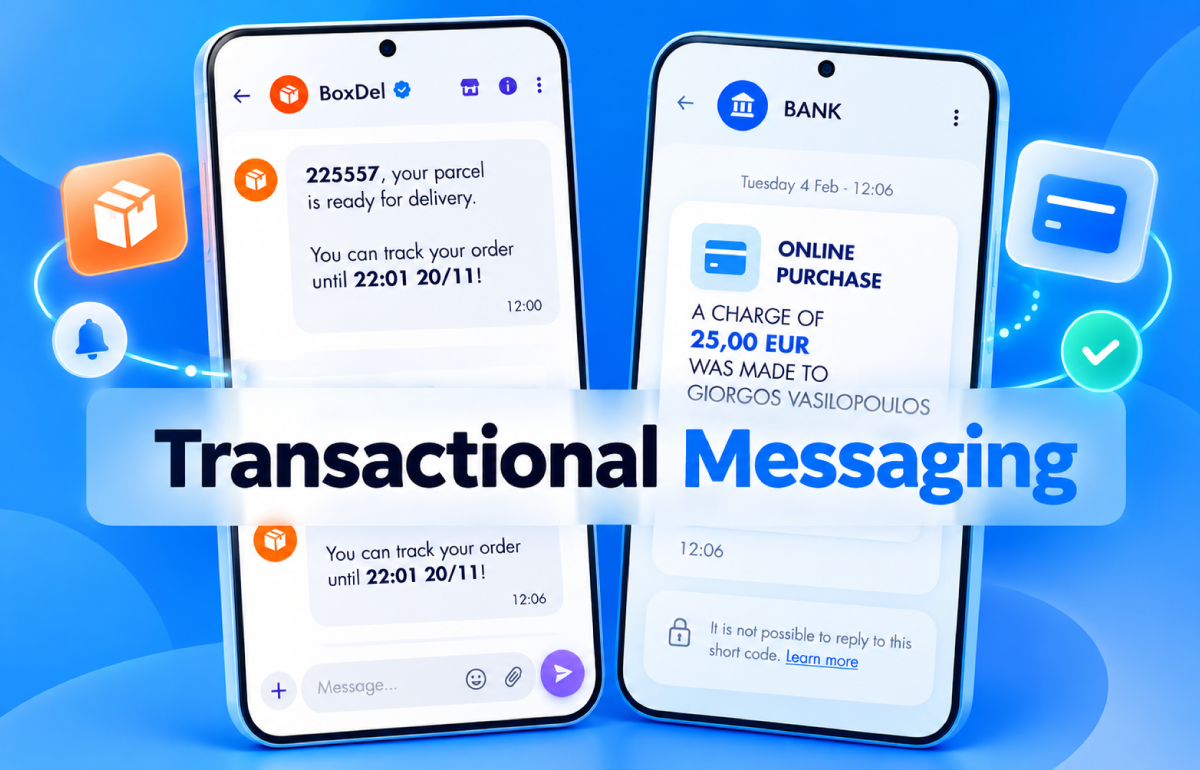
A Transactional SMS is generally associated with a specific transaction, service, or action initiated by the customer.
For example:
"Your order #4821 has been shipped."
A Promotional SMS, on the other hand, is intended to advertise products, services, or commercial offers.
For example:
"Discover our latest offers with discounts of up to 30%."
This distinction matters because a genuinely operational message may rely on a different legal basis for processing than a promotional communication.
However, simply labeling a message as "transactional" does not automatically exempt it from electronic marketing requirements.
If an order confirmation also includes promotional content, the marketing element must be assessed separately.
Practical Examples
| Message | Typical Classification |
|---|---|
| Order confirmation | Transactional |
| OTP verification code | Transactional / Security |
| Appointment reminder | Operational |
| New product promotion | Promotional |
| Discount code for a future purchase | Promotional |
| Shipping notification | Transactional |
| Order confirmation containing an advertisement | Mixed purpose — requires further assessment |
Understanding the difference helps businesses organize their communication workflows and apply the appropriate compliance requirements.
How to Maintain a High-Quality SMS Marketing List
The quality of your contact database directly affects campaign performance, data accuracy, and the overall recipient experience.
Continuously adding new phone numbers is not enough.
Verify Contact Information
Incorrect or outdated phone numbers can increase failed deliveries and create unnecessary costs.
Implement appropriate data validation and updating processes.
However, remember that having a technically valid mobile number does not establish permission to use it for promotional communication.
Remove Duplicate Contacts
The same recipient may appear in multiple contact lists.
Duplicate records increase the risk of sending repeated messages to the same person.
Centralized contact management can help businesses maintain a consistent view of each recipient.
Keep Communication Preferences Up to Date
When customers ask to stop receiving promotional SMS messages, their preferences should be reflected across the relevant systems.
Opt-out management should not depend on manually updating multiple spreadsheets.
Avoid Contact Lists of Uncertain Origin
Purchasing a database of mobile phone numbers does not automatically grant permission to use those numbers for marketing.
Even when a third party claims to have collected valid consent, businesses must assess whether it covers the specific organization, communication purpose, and channel.
For a sustainable long-term strategy, prioritize building your own subscriber database through transparent registration processes.
How to Combine GDPR Compliance with Effective SMS Marketing
Compliance should not be viewed simply as an obstacle to running successful campaigns.
A well-organized contact database can become a valuable business asset.
When you understand which recipients want to hear from your business, you can design more relevant campaigns and avoid unnecessary communications.
Target Customers Based on Relevant Needs
Use appropriate audience segmentation, provided that the processing of the relevant data is supported by a lawful basis and adequate privacy information.
For example, you may organize communications by product category, stated preferences, or other relevant criteria.
Personalization should serve a clear purpose rather than lead to the unnecessary collection of additional personal data.
Choose the Right Message Frequency
A customer may have agreed to receive promotional SMS messages, but that does not necessarily mean they want to receive them every day.
Establish a reasonable communication frequency based on the value of your content and recipients' expectations.
Create Clear, Useful Messages
An effective SMS should be easy to recognize, communicate a clear message, and encourage a specific action.
For example:
"[Brand]: Discover our latest offers until 20 October: [link]. Unsubscribe: [opt-out link]."
A recognizable sender, clear promotional information, and a straightforward opt-out mechanism are essential elements of a well-structured SMS campaign.
8 Common SMS Marketing Compliance Mistakes to Avoid
1. Sending SMS Campaigns to Your Entire CRM Database
Having someone's phone number in your CRM does not automatically mean you can use it for every promotional purpose.
2. Using Preselected Consent Checkboxes
Pre-ticked boxes are not an appropriate mechanism for obtaining GDPR-compliant consent.
3. Failing to Document Consent
Without proper records, demonstrating when and how consent was obtained may become difficult.
4. Making Unsubscribing Difficult
The opt-out process should be simple, accessible, and functional.
5. Using Old Contact Lists Without Reviewing Them
A database created several years ago should be assessed for its origin, lawfulness, accuracy, and permitted purposes of use.
6. Mixing Transactional and Promotional Messages
Adding promotional content to an operational notification can change the legal assessment of the communication.
7. Failing to Synchronize Communication Preferences
When your CRM and messaging platform do not synchronize subscription preferences, the risk of sending unwanted messages increases.
8. Choosing a Messaging Platform Based Only on Price
Contact management capabilities, security, reporting, integrations, and technical support also matter when building a sustainable SMS Marketing strategy.
What to Look for in an SMS Marketing Platform
A modern bulk SMS platform should help your business not only create campaigns but also manage contacts and communication processes efficiently.
When evaluating a solution, consider the following:
Contact Management: Can you organize contact lists, remove duplicates, and apply suppression rules?
Opt-out Management: Are suitable mechanisms available to handle unsubscribe requests?
Segmentation: Can you create recipient groups based on relevant and legally permitted criteria?
Integrations: Can the platform connect with your CRM, ERP, or e-commerce systems?
SMS API: Does it support automated messaging and data synchronization through APIs?
Reporting: Can you monitor message delivery status and campaign performance?
Security: Are appropriate access controls and data protection measures in place?
Technical Support: Is assistance available for implementation, integration, and ongoing operation?
It is important to remember that no messaging platform automatically makes a contact database legally compliant.
Businesses remain responsible for the lawful collection and use of personal data, according to their respective roles and obligations.
SMS Marketing Compliance Checklist: What to Check Before Every Campaign
Before launching a bulk SMS campaign, make sure that:
- You have clearly defined the purpose of the campaign.
- You have identified an appropriate lawful basis for data processing and satisfied the applicable electronic marketing requirements.
- The source of the phone numbers is known and documented.
- Recipients who have withdrawn consent or objected to marketing have been excluded.
- The message content is consistent with the permitted communication purpose.
- The sender's identity is clear.
- A simple and functional opt-out mechanism is available.
- Your recipient list has been checked for duplicates and errors.
- You have completed a test send.
- You have a process for monitoring results and handling potential issues.
This checklist does not replace a legal assessment, but it can support a consistent internal campaign approval process.
Conclusion
Effective SMS Marketing does not begin with writing a promotional message. It begins with building a reliable subscriber database and a clearly defined communication strategy.
Proper consent management, accessible opt-out processes, accurate contact information, and integration with business systems help organizations deliver more targeted and consistent campaigns.
At the same time, choosing the right messaging platform can simplify contact management, campaign automation, and performance monitoring.
The goal is not simply to send more SMS messages. It is to communicate with the right recipients, deliver valuable content, and respect their preferences.
Through its Octapush platform, Yuboto provides Business Messaging solutions that help businesses create, manage, and automate communications via SMS and other supported channels.
Discover how a modern Business Messaging platform can help you organize customer communications more efficiently.
Talk to an Expert